
Jasper Philipsen: Inside the Final 200 Metres and How to Train for a Faster Cycling Sprint

The fastest rider doesn't always win. The smartest sprint often does.
200 metres.
At 70 km/h, that's just over ten seconds.
Ten seconds to find the right position, choose your moment and turn every last watt into speed.
For Wahoo athlete Jasper Philipsen, those final seconds can mean the difference between winning a Tour de France stage and watching someone else cross the line first.
But what makes Jasper Philipsen one of the world's best cycling sprinters? And what can everyday cyclists learn from his explosive finishing speed?
Let's get into the science, strategy and training behind a great sprint.
Who Is Jasper Philipsen?
Belgian professional cyclist Jasper Philipsen has established himself as one of the most successful sprinters in modern road cycling.
With multiple Tour de France stage victories, the 2023 Tour de France Green Jersey and victory at Milan-San Remo in 2024, Philipsen has demonstrated that he's much more than a rider with an explosive finishing kick.
His success comes from combining raw sprinting power with race awareness, positioning, endurance and teamwork.
Winning a bunch sprint requires more than producing the highest peak power. It means arriving at the final few hundred metres in the right place, with enough energy left to accelerate and the confidence to commit at exactly the right moment.
And that's where things get interesting for the rest of us.
Because whether you're racing professionally, competing in a local criterium or trying to win the sprint to the town sign, many of the same principles apply.
What Makes Jasper Philipsen Such a Fast Sprinter?
1. Positioning Before Power
Watch the final kilometres of a professional cycling race and you'll notice something interesting.
The sprinters aren't simply waiting at the back of the peloton to unleash their power.
They're constantly fighting for position.
A well-timed move through the bunch can be worth more than an extra hundred watts at the finish. Get boxed in, take the wrong wheel or launch too early, and even the strongest legs might not be enough.
For Jasper Philipsen, positioning and teamwork are essential parts of the sprint.
His teammates help him navigate the peloton, conserve energy and reach the decisive moments in a competitive position.
The lesson for everyday cyclists?
Learn to anticipate changes in pace, ride efficiently in a group and avoid wasting energy on unnecessary accelerations.
And remember that sprinting in a group requires good judgement and a clear commitment to safety. Save maximal efforts for appropriate, controlled conditions.
2. Timing Your Sprint
When should you start sprinting?
There's no universal answer.
The ideal moment depends on your speed, fatigue, the gradient, wind conditions and the riders around you.
Launch too early and you risk fading before the line. Wait too long and you might run out of road.
At 60 km/h, a cyclist covers approximately 17 metres every second. A hesitation of just two seconds can make an enormous difference.
Successful sprinters learn to judge their effort, build speed efficiently and commit when the opportunity appears.
That ability comes from experience, but it can also be developed through training.
3. Producing Power When You're Already Tired
One of the most impressive things about professional sprinting isn't simply the peak power riders can generate.
It's when they generate it.
A Tour de France sprint often comes after several hours of racing, repeated changes of pace, climbs, crosswinds and the constant physical demands of riding in the peloton.
Producing a powerful sprint when you're fresh is one thing.
Doing it after 180 kilometres is another.
That's why cycling sprint training shouldn't focus exclusively on short, maximal efforts. Endurance, recovery and the ability to repeat high-intensity efforts all contribute to a strong finishing sprint.
How to Improve Your Cycling Sprint Power
You don't need to be Jasper Philipsen to benefit from sprint training.
Whether you're a road cyclist, gravel rider, triathlete or indoor cycling enthusiast, developing your ability to accelerate can make you a more capable rider.
Here are three ways to start improving your cycling sprint.
Build Explosive Power with Short Sprints
Short accelerations help develop the neuromuscular coordination and power required to accelerate quickly.
The goal is to produce a strong, controlled effort while maintaining good pedalling technique.
Start with efforts lasting between 6 and 10 seconds, followed by plenty of recovery.
Focus on accelerating smoothly rather than immediately jumping into the heaviest possible gear.
As your technique and confidence improve, you can gradually increase the intensity.
Train Your Ability to Repeat Hard Efforts
Cycling rarely involves just one acceleration.
Group rides, criteriums and road races often demand repeated bursts of power, sometimes with very little recovery between them.
Training your ability to handle these changes in intensity can help you respond more effectively when the pace increases.
Short intervals with controlled recovery periods are a useful addition to a broader cycling training programme.
Develop Your Endurance Alongside Your Sprint
Want to sprint faster at the end of a long ride?
Don't forget the kilometres that come before it.
A strong aerobic foundation helps you tolerate the demands of longer rides and recover between hard efforts.
Combining endurance training with occasional sprint sessions gives you a more complete approach to improving your finishing speed.
Remember that sprint training is demanding. Allow adequate recovery between high-intensity sessions, particularly when you're introducing explosive efforts into your routine.
Wahoo Workout: The Final 200m Sprint Challenge
Ready to put some of these ideas into practice?
This short cycling sprint workout is designed to help you work on acceleration, power and technique.
You can complete it indoors on a Wahoo KICKR smart trainer or outdoors in a safe, traffic-free environment.
Warm-Up: 15 Minutes
Begin with easy pedalling and gradually increase your effort.
Include a few short, moderate accelerations to prepare your legs for the main session.
Main Set: 4 × 10-Second Sprints
Complete four hard, controlled accelerations lasting 10 seconds each.
Take three minutes of easy spinning between efforts.
During each sprint, focus on accelerating smoothly, maintaining a stable position and producing power without sacrificing technique.
On a smart trainer, use a suitable resistance or simulation mode that allows you to accelerate naturally. Avoid a fixed ERG power target for maximal sprint efforts.
Cool-Down: 10 Minutes
Finish with easy pedalling to bring your effort back down.
The goal isn't simply to produce the biggest number on your screen. It's to develop a powerful, repeatable acceleration.
As you progress, track your sprint power and compare your efforts over time. Look for improvements in consistency, acceleration and your ability to maintain power throughout each effort.
For beginners, start with submaximal accelerations and increase intensity gradually.
Can Indoor Cycling Improve Your Sprint?
Absolutely. Indoor cycling can provide a controlled environment for practising short accelerations, monitoring power and building consistency.
A smart trainer such as the Wahoo KICKR allows you to combine structured endurance sessions with sprint-specific workouts, without needing to find a suitable stretch of road.
It also makes it easier to repeat sessions under similar conditions.
When you're trying to improve your cycling sprint power, that consistency can be valuable.
However, indoor sprinting isn't identical to sprinting outdoors. Bike handling, positioning and riding safely around other cyclists are skills that still need to be developed on the road.
The strongest approach combines structured training with real-world riding experience.
Understanding Your Sprint: Power, Heart Rate and Training Data
Want to know whether your sprint training is working?
Start by understanding what your data is telling you.
Power: Measure Your Acceleration
Power is one of the most useful metrics for evaluating sprint performance.
Your peak power gives you an indication of your highest recorded output, while your best 5-second and 10-second power values can help you evaluate short, explosive efforts.
But remember that a high peak power number doesn't automatically make you a faster sprinter.
Aerodynamics, gearing, timing and the ability to produce power at speed all influence the result.
Heart Rate: Understand the Bigger Picture
Heart rate is useful for monitoring training intensity, recovery and the cardiovascular demands of your sessions.
During very short sprints, however, heart rate responds too slowly to accurately represent the immediate effort.
That's why power is generally the more useful metric for evaluating an individual 10-second sprint.
Heart rate becomes particularly valuable when looking at your broader training session and how your body responds to repeated efforts.
Track Progress, Not Just Personal Records
Not every ride needs to end with a new power record.
Look for trends over time.
Are your sprint efforts becoming more consistent? Can you produce strong accelerations later in a ride? Are you recovering better between efforts?
Those improvements matter just as much as your biggest wattage number.

Inside the Sprint with Jasper Philipsen
What does it really take to deliver when everything comes down to the final 200 metres?
Go behind the scenes with Wahoo athlete Jasper Philipsen and explore the speed, strategy, teamwork and split-second decisions that shape a professional cycling sprint.
From navigating the chaos of the peloton to committing to the final acceleration, discover why a successful sprint begins long before the finish line.
WATCH: THE FINAL 200M WITH JASPER PHILIPSEN
Train Smarter with Wahoo
Whether your goal is a faster finishing sprint, stronger group rides or simply becoming a more confident cyclist, the right training tools can help you understand your performance and make every session count.
Wahoo KICKR: Build Your Sprint Power Indoors
The Wahoo KICKR smart trainer brings accurate power measurement, responsive resistance and realistic ride feel to your indoor cycling setup.
Use it to build endurance, complete structured intervals and practise controlled sprint accelerations throughout the year.
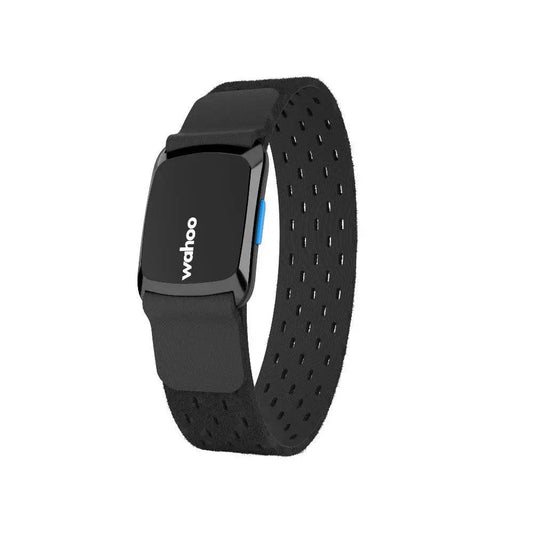
Wahoo TRACKR HEART RATE: Understand Your Effort
Monitor your heart rate throughout endurance rides, interval sessions and recovery periods with Wahoo TRACKR HEART RATE.
Combine heart rate data with power to develop a clearer understanding of your training.
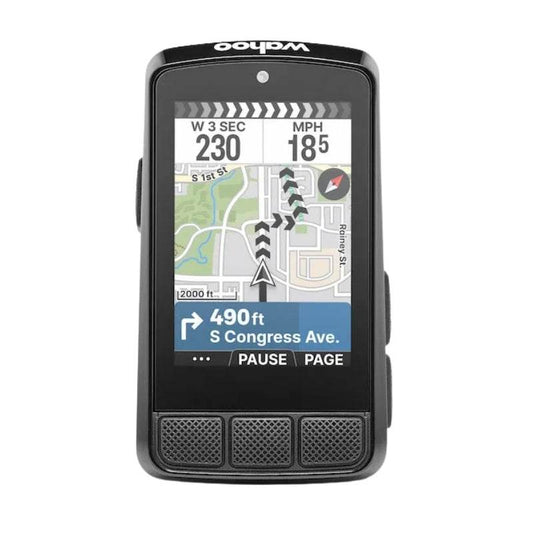
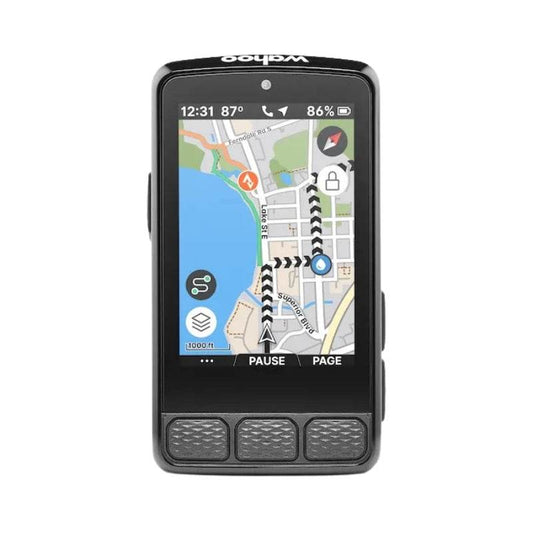
Wahoo ELEMNT BOLT: Take Your Training Outdoors
Track power, speed, heart rate and ride data with the Wahoo ELEMNT BOLT GPS bike computer.
Whether you're working on sprint efforts, following a training route or reviewing your latest group ride, keep the information that matters close at hand.
Your Next Sprint Starts Long Before the Finish
Jasper Philipsen has built a career around delivering when the pressure is at its highest.
But behind every successful sprint are countless hours of training, preparation and teamwork.
And that's something every cyclist can relate to.
You might not be chasing a Tour de France stage victory.
Maybe you're trying to stay with the faster group on your next club ride. Maybe you're working towards your first race. Or maybe you just want to be the first one past that familiar town sign.
Whatever your finish line looks like, the principle is the same.
Train with purpose. Learn from every ride. And when the moment comes, give it everything you've got.
Ride on.