
12-3-30 Incline Walking: What the Research Says and How to Get More Out of It
Twelve percent incline, 4.8 km/h, thirty minutes. Few treadmill sessions have spread as fast as 12-3-30. Along the way it picked up some big promises: that it beats running for fat loss, or that it burns 500 calories every time.
The workout has now been tested in a lab twice. The measured numbers are smaller than the viral ones, but they still describe a session worth keeping, as long as you do it properly. Here is what the research says, how to get more out of incline walking, and what to look for in a treadmill if you want to keep progressing.
12-3-30 at a glance
| Incline | Speed | Time |
|---|---|---|
| 12 % | 4.8 km/h | 30 min |
What is the 12-3-30 workout?
The name is the settings. The treadmill is set to a 12% incline, the speed to 3 miles per hour (about 4.8 km/h, or a brisk walk at roughly 12.5 minutes per kilometre), and you walk for 30 minutes. It was popularised by Lauren Giraldo on social media, and it caught on because it is so simple: no technique to learn, no coach needed, and any treadmill with a working incline motor can run it.
That simplicity is also why it suits the Nordic winter so well. When it is dark at four in the afternoon and the roads are icy, a steady 30-minute uphill walk indoors keeps your aerobic training going without any planning.
What the lab found
Two studies have measured 12-3-30 directly. Both are small and both used young, already active adults, so treat them as a first look rather than a final verdict.
Intensity. Researchers at Western Colorado University put 17 participants through the session and measured 5.5 METs, 47% of heart rate reserve and about 221 kcal over 30 minutes. That is moderate intensity by the standard definition: repeatable aerobic work rather than a hard session.
Calories. A second study compared 12-3-30 with self-paced running. Incline walking used about 10.2 kcal per minute against 13.1 for running, and needed roughly 30 minutes to reach the energy cost that running reached in 24. In other words, it is not the fastest way to burn calories.
Neither study followed anyone over time, and there is no published data yet linking 12-3-30 to weight loss, body composition or fitness gains. But the research does point to one clear advantage.
Half the impact of jogging
Matched for calories burned, incline walking produced around half the peak impact of jogging. In a study of 19 previously inactive adults, impact at the foot measured 10.5 m/s² when walking against 22.1 m/s² when jogging, and at the lower back 12.6 against 27.2. A second study of 22 participants found the same pattern. Both tested incline walking at a 20% grade rather than the exact 12-3-30 protocol, but the principle holds.
That makes incline walking a strong option if you are coming back from injury, carrying extra weight, or simply want more aerobic volume without more pounding. Runners can use it the same way, as easy aerobic work on days when the legs need a break from impact.
Lower impact does not mean no load, though. Steep walking works the calves and Achilles hard, so build up to it rather than starting with 30 minutes at 12%.
Let go of the handrails
On a steep grade it is tempting to hold on, and that changes the session more than most people realise. In one study, gripping the rails cut oxygen consumption by 15–21% compared with a free arm swing at the same speed and grade. Another found that leaning back at a 10% grade cut energy expenditure by nearly a third, which almost cancels out the hill.
It also makes the calorie figure on the display meaningless, since it assumes you are carrying your full body weight.
The rule is simple: if you cannot hold the grade without support, the grade is too high for today. Lower it until you can walk upright with your arms swinging, then build back up. An 8% incline walked properly is worth more than 12% hanging off the rails.
How to progress beyond 12-3-30
12-3-30 is a fixed prescription, which makes it easy to start and easy to outgrow. The session that feels hard in week one will feel manageable by week six. That is the adaptation working, and the signal to move the numbers. Treat 12-3-30 as a starting dose and build from there:
- Add minutes before you add incline. If 30 minutes at 12% is still hard, build up from 15–20 minutes at 6–8% first.
- Raise the grade in small steps, one percent at a time, once you can hold the current one with your hands free.
- Break the 30 minutes into intervals. One example: 3 minutes at 13–15% followed by 2 minutes at 5–6%, repeated six times.
- Walk downhill now and then. Decline loads the legs differently and is almost never trained indoors. A few easy minutes at -2 to -3% at the end of a session is a good start.
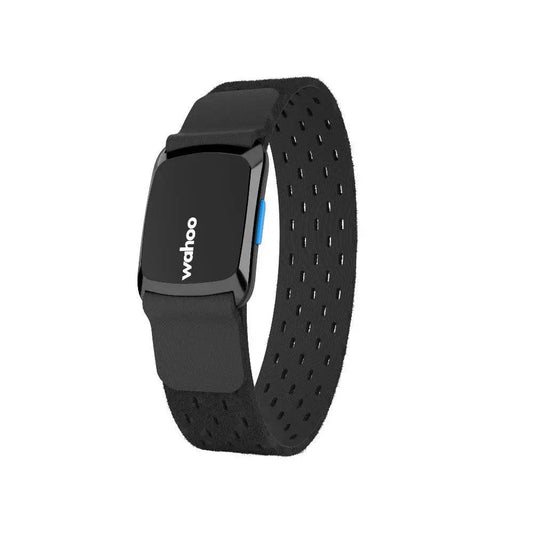
- Watch the right numbers. Cadence and ground contact time show whether your technique holds as the grade climbs, which a calorie estimate cannot. Use a heart rate monitor to keep the effort in the moderate zone the session is meant for.
Walking pad or treadmill?
Walking pads have become a popular way to get more steps in at home or under a standing desk. They are built for slow, flat walking, and most have no incline at all. That means they cannot run 12-3-30, let alone take you beyond it. For incline walking you need a treadmill with a motorised incline, and ideally a decline too.

Choosing a treadmill for incline walking
If incline walking is going to be a big part of your training, four things matter:
- Headroom above 12%. A treadmill that stops at 12% makes 12-3-30 its ceiling.
- Decline as well as incline. Most treadmills only go up, but downhill adds valuable variety.
- A deck and belt you can spend 30 minutes on, with room for a full stride.
- Data you can trust, measured rather than estimated.
Where Wahoo KICKR RUN fits
Wahoo KICKR RUN is built for exactly this kind of session.
Incline to 15%, decline to -3%. The 15% ceiling leaves room to progress past 12-3-30. The decline is the rarer feature, and makes downhill work possible indoors.
RunFree hands-free pacing. A time-of-flight sensor tracks where you are on the belt and matches the speed to you, so there is no reaching for the console mid-session. Since reaching for the rails is what undermines incline walking most, that matters. You can cap the top speed.
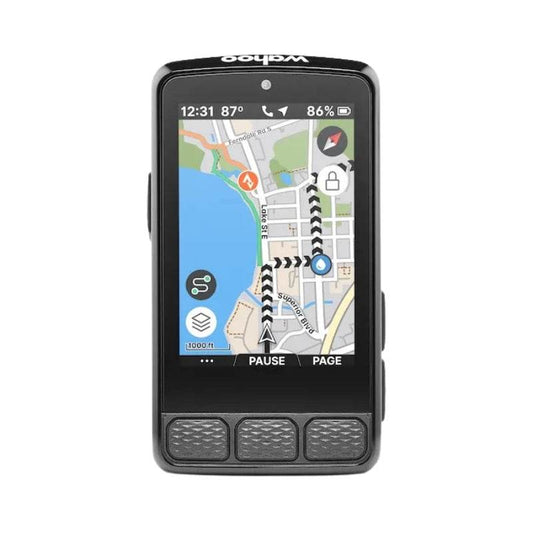
Automatic grade control. The incline changes on its own through a structured workout or a simulated route, so your incline intervals run themselves. Manual control is a button away.

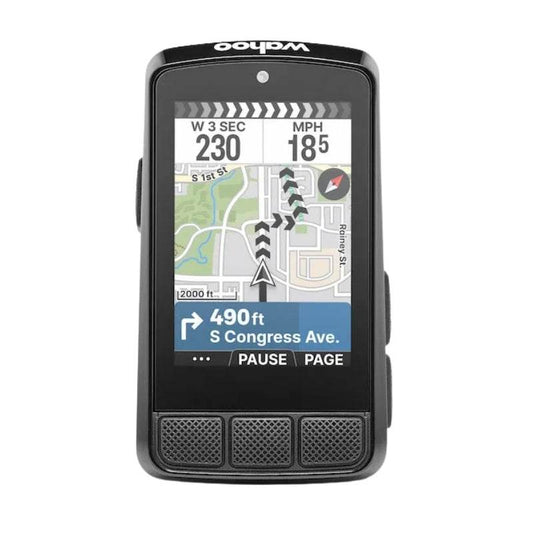
Running metrics without an extra sensor. Cadence, ground contact time and vertical oscillation are streamed directly from the treadmill, giving you an objective read on whether you are doing the work or gradually handing it to the handrails.
No subscription needed for the hardware. RunFree, grade control and the metrics work from day one. Route simulation and structured workouts come with a Wahoo App subscription, and KICKR RUN also works with Zwift, Kinomap, Humango, Peloton and MyWhoosh.
Two practical things to check before you order: KICKR RUN is rated for users up to 113 kg, and it needs its own dedicated 16 A circuit (200–240 V). Both are worth confirming at home first. Read more on the KICKR RUN product page.
Bottom line
12-3-30 holds up, though not for the reasons it went viral. It will not out-burn running, but it gives you real aerobic work at around half the impact of jogging, in a format simple enough to repeat all winter. Keep your hands off the rails, and move the numbers as you get fitter.
Frequently asked questions
Does the 12-3-30 workout work?
Yes, as a moderate-intensity aerobic session. Lab measurements put it at 5.5 METs and 47% of heart rate reserve. No study has yet tracked whether it leads to weight loss or fitness gains over time.
How many calories does 12-3-30 burn?
Around 221 kcal per 30-minute session in the study that measured it. The 400–600 kcal often quoted online is well above what was recorded. Your own number depends on body weight and fitness.
Is 12-3-30 better than running?
Not for burning calories quickly: 10.2 kcal per minute against 13.1 for self-paced running. Its advantage is impact, at roughly half the peak forces of jogging for the same energy cost.
Can I hold the handrails during 12-3-30?
Better not to. Gripping the rails cut oxygen consumption by 15–21% in one study. If you need the rails to hold the grade, lower the grade.
Is 12-3-30 good for beginners?
It is one of the easier ways in, since it is walking and lower impact than jogging. Build up gradually rather than starting with 30 minutes at 12%, as steep walking loads the calves and Achilles.
What speed is 3 mph in km/h?
About 4.8 km/h. Set your treadmill to 4.8 km/h and 12% incline for the original protocol.
Can I do 12-3-30 on a walking pad?
Usually not. Most walking pads have no incline, and 12-3-30 needs a treadmill that reaches at least 12%, preferably more so there is room to progress.
Studies referenced
- Pelino LM, Diaz J, Dalleck LC. Physiological Responses of the 12-3-30 Workout: Exercise Myth or Reality? International Journal of Research in Exercise Physiology, 2024;20(1).
- Wong MWH, et al. An Exploratory Study Comparing the Metabolic Responses between the 12-3-30 Treadmill Workout and Self-Paced Treadmill Running. International Journal of Exercise Science, 2025;18(6):56–64.
- Krieger et al. International Journal of Exercise Science, 2025;18(7):995–1009.
- Kundu et al. International Journal of Exercise Science, 2024;17(1):1478–1492.
- Berling J, et al. Journal of Cardiopulmonary Rehabilitation, 2006;26(6):391–394.
- Hofmann et al. International Journal of Exercise Science, 2014;7(4):339–345.